Water Damage Categories 1, 2, 3: Old Town Brownsburg Guide
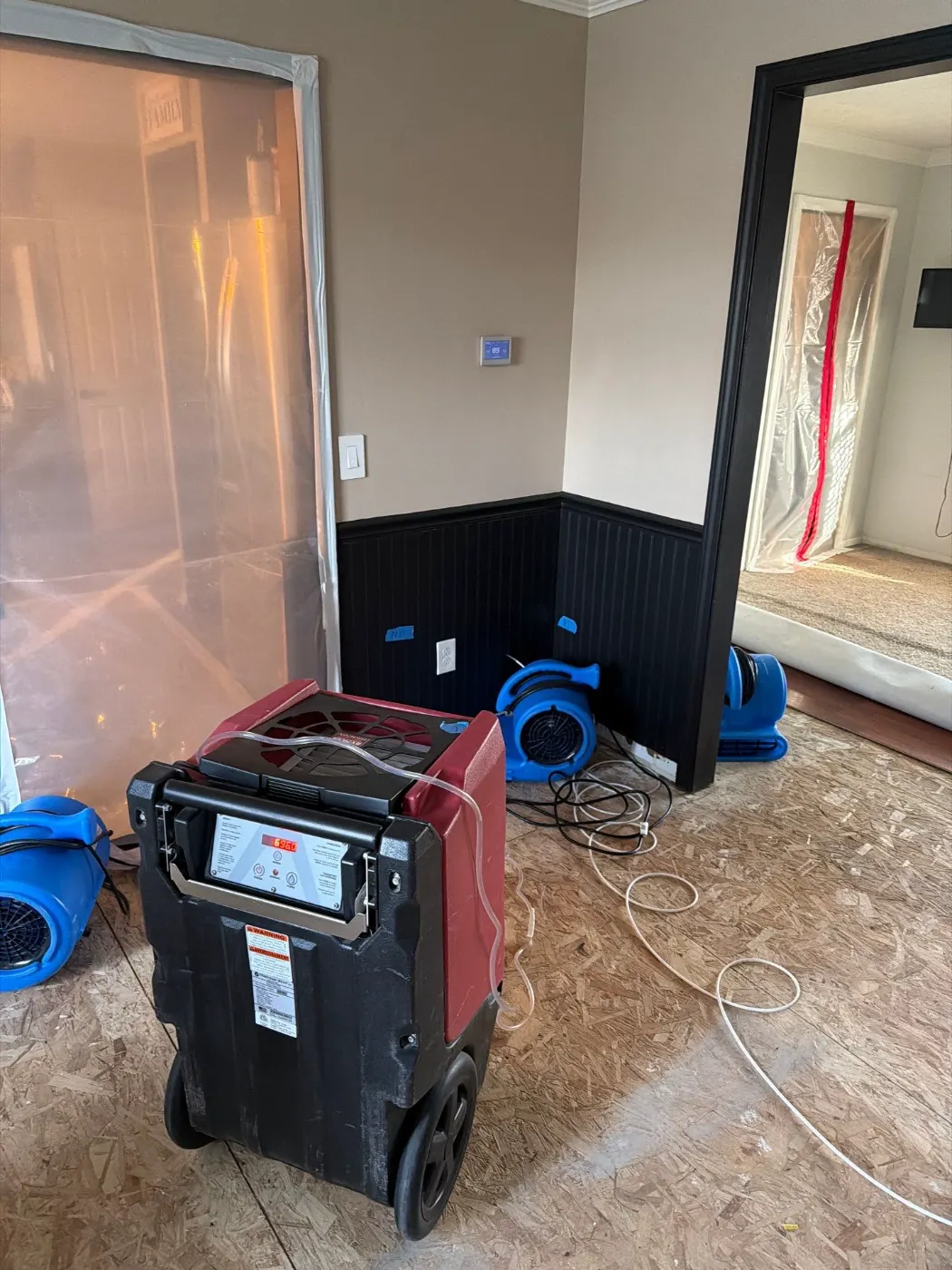
When water shows up where it does not belong, the first question we ask at Old Town Brownsburg Water Restoration is not how much, but what kind. The IICRC sorts water damage into three categories, and that single label drives almost every decision that follows: what gets dried, what gets cut out, what your insurer pays for, and how fast our crews need to be on your Old Town Brownsburg property before a manageable loss turns into a biohazard.
Most homeowners in Old Town Brownsburg call us thinking water is water. It is not. A supply line that splits behind a vanity is a completely different event from a toilet that backs up onto the same bathroom floor, even if the puddle looks identical at midnight. The IICRC categories (1, 2, and 3) describe contamination level at the source, and they also describe how that water behaves after sitting on your subfloor for 24 or 48 hours. Clean water degrades. Grey water degrades faster. Black water is already a containment problem the second it hits your slab.
This guide gives you the comparison most contractors will not put in writing, then walks through what each category actually means for your repair scope, your timeline, and your claim. If we cannot help with your specific situation, we will tell you directly on the phone before anyone drives out.
The 2 AM Supply Line: A Category 1 Story
Back to that Old Town Brownsburg homeowner with the bathroom supply line. When our crew arrived just before 3 AM, the water on her kitchen floor was clear, odorless, and came from a potable copper line. That is textbook Category 1, what the IICRC calls "clean water." It originates from a sanitary source and poses no substantial health risk at the moment of release.
Because we were on site within about 50 minutes of her call, we extracted roughly 80 gallons of standing water, pulled the soaked toe kick under her cabinets, drilled small weep holes behind the baseboard so the wall cavity could vent, and set six air movers plus a commercial dehumidifier. Total dry out took just under four days. Her drywall stayed. Her engineered hardwood stayed. Her insurance paid the claim without a fight. The mitigation invoice landed around $3,400, which is typical for a contained Category 1 loss in a Old Town Brownsburg home.
Here is the catch most homeowners do not know. Clean water does not stay clean. After roughly 24 to 48 hours sitting in drywall, carpet pad, or subfloor, Category 1 begins degrading into Category 2. If she had waited until morning to call, we would have been having a very different conversation. Our professional drying timeline guide walks through exactly how that clock works.
When Categories Shift Mid-Job
One detail homeowners rarely hear about is that a category can change during the job itself. We had a Old Town Brownsburg kitchen loss start as a clean dishwasher supply line, classic Category 1, but the water had migrated under a tile floor and sat for nearly four days before anyone noticed the warped baseboards. By the time we opened the cavity, lab swabs came back showing elevated bacterial counts, and we reclassified the loss as Category 2 on the spot. That reclassification changed our scope, added antimicrobial application, and required us to amend the report to the adjuster the same afternoon. Honest documentation at that moment protected the homeowner from a denied claim later.
The Finished Basement and the Sewer Backup: Category 3
The hardest call we took last spring came from a Old Town Brownsburg homeowner whose finished basement had filled with about three inches of sewer backup after a city main blockage. Brown water, visible solids, the smell hit him before he reached the bottom of the stairs. His kids' playroom, a guest bedroom, an office, a sectional sofa, two area rugs, and roughly 900 square feet of laminate flooring were all submerged.
That is Category 3, "black water," and it is the category that scares us because it should scare you. Category 3 includes sewage, rising groundwater from outside the structure, toilet overflows that pass the trap, and any water that has been sitting long enough to grow into a microbial soup. It contains pathogens, viruses, and bacteria that cause genuine illness. The IICRC standard, S500, is unambiguous: porous materials that contacted Category 3 water must be removed and discarded. There is no shortcutting that step, no matter how new the carpet was.
For that homeowner, the work included full PPE for our technicians, controlled demolition of drywall up to 24 inches, removal of all flooring and pad, structural drying of the slab and framing, antimicrobial treatment, air scrubbing with HEPA filtration, and post remediation verification. The mitigation invoice came in at $14,200, and his homeowners policy covered most of it under his sewer backup rider. If you are looking at something similar right now, our sewage cleanup service page and our black water emergency cleanup guide spell out exactly what to expect.
How to Tell What You Are Looking At
Before our crew even arrives, you can usually narrow the category yourself with three quick questions:
- Where did the water come from, a clean supply line and treated source, or a drain, appliance, or outside the home?
- How long has it been sitting, under 48 hours or longer?
- What does it look and smell like, clear and odorless, cloudy with mild odor, or discolored with a strong smell?
Clean source, fresh, and odorless points to Category 1. Drain or appliance source, mild odor, or water older than two days points to Category 2. Sewage, groundwater, or anything older than 72 hours sitting in materials points to Category 3.
When You Need a Straight Answer About Your Water Loss in Old Town Brownsburg
Categories are not just labels. They decide what gets saved, what gets removed, what your insurance covers, and how safe your family is during the cleanup. If you are looking at standing water right now and cannot tell what you are dealing with, call Old Town Brownsburg Water Restoration. We will assess the category honestly, walk you through the cost range before any work starts, and if your situation does not need a full restoration crew, we will tell you that too. Same day response across Old Town Brownsburg and surrounding central Indiana communities, 24 hours a day.
Why the Category Drives Your Whole Claim
Insurance adjusters in Old Town Brownsburg read mitigation reports looking for one thing first: category. It dictates the scope of demolition, the antimicrobial line items, the PPE requirements, the documentation standard, and ultimately the reserve they set on your claim. When Old Town Brownsburg Water Restoration writes a report, we document the category with photos, moisture readings, and source identification so your adjuster cannot push back on legitimate scope. That is a quiet part of this job most homeowners never see, but it is often the difference between a claim that pays in full and one that gets nickeled.
The Washing Machine on the Second Floor: Category 2
A few months later, a young family in a Old Town Brownsburg two story called us on a Saturday afternoon. Their washing machine had overflowed during the spin cycle and pushed soapy, dirty wash water across the laundry room, down the hall, and through the floor into the dining room ceiling below. The water was cloudy, had a faint detergent smell, and contained whatever was rinsed off their clothes. That is Category 2, also called "gray water."
Category 2 carries significant contamination. Bacteria, detergents, urine traces from clothing, food residue from dishwashers, sump pit overflow without sewage, all of it qualifies. It can cause real illness if ingested or if it sits long enough to grow microbial colonies. Our protocol changes immediately. We extract, then we apply an EPA-registered antimicrobial, then we make hard calls about porous materials. Carpet pad almost always goes. Carpet itself sometimes can be cleaned and saved if we get to it within 24 hours. Wet drywall below the flood line typically gets cut out at 12 or 24 inches.
For that family, the mitigation portion ran around $5,800, and we coordinated directly with their adjuster. The dining room ceiling below was the trickiest part. Gray water had pooled on top of the drywall, sagging it into a visible bubble. We scored the bubble, drained the trapped water into a containment bin, and removed a 4 by 6 foot section so we could dry the joist bays from both sides. That kind of two sided drying is what keeps a ceiling repair from turning into a full reframe two weeks later. If you are reading this with a similar situation, the breakdown in our Category 2 gray water cleanup article covers what stays and what goes in plain language.
Frequently Asked Questions
How do I know if my water damage is Category 1, 2, or 3?
Trace the source. Clean supply lines are Category 1, appliance discharge or aquariums are Category 2, and any sewage, ground flooding, or water sitting more than 72 hours is Category 3. Old Town Brownsburg Water Restoration will confirm classification onsite in Old Town Brownsburg with moisture mapping and contamination indicators.
Can Category 1 water turn into Category 2 or 3?
Yes. Clean water reclassifies to Category 2 within 24 to 48 hours and to Category 3 within 72 hours when it contacts contaminated materials or grows microbial activity. This is why same-day response in Old Town Brownsburg matters.
Does insurance cover all three categories of water damage?
Most homeowners policies cover sudden and accidental losses regardless of category, including Category 3 from a backed-up toilet if you have sewer backup coverage. Old Town Brownsburg Water Restoration provides the documentation adjusters need.
What materials cannot be saved from Category 3 water?
All porous materials: carpet, pad, drywall, insulation, particleboard, upholstered furniture, and mattresses. Sealed tile, finished concrete, and properly finished hardwood can often be cleaned and saved.
How fast can Old Town Brownsburg Water Restoration respond in Old Town Brownsburg?
Our standard response window is 60 to 90 minutes for emergency calls in Old Town Brownsburg and surrounding central Indiana communities, 24 hours a day, seven days a week.
Have a restoration question?
Our IICRC certified Old Town Brownsburg crew is ready to help. Free assessments, estimate based on what we can sees, no pressure.